Rear wheel adapter
An interface between the car's composite frame and its rear wheel, which was lighter, serviceable, and manufacturable in-house.
the problem
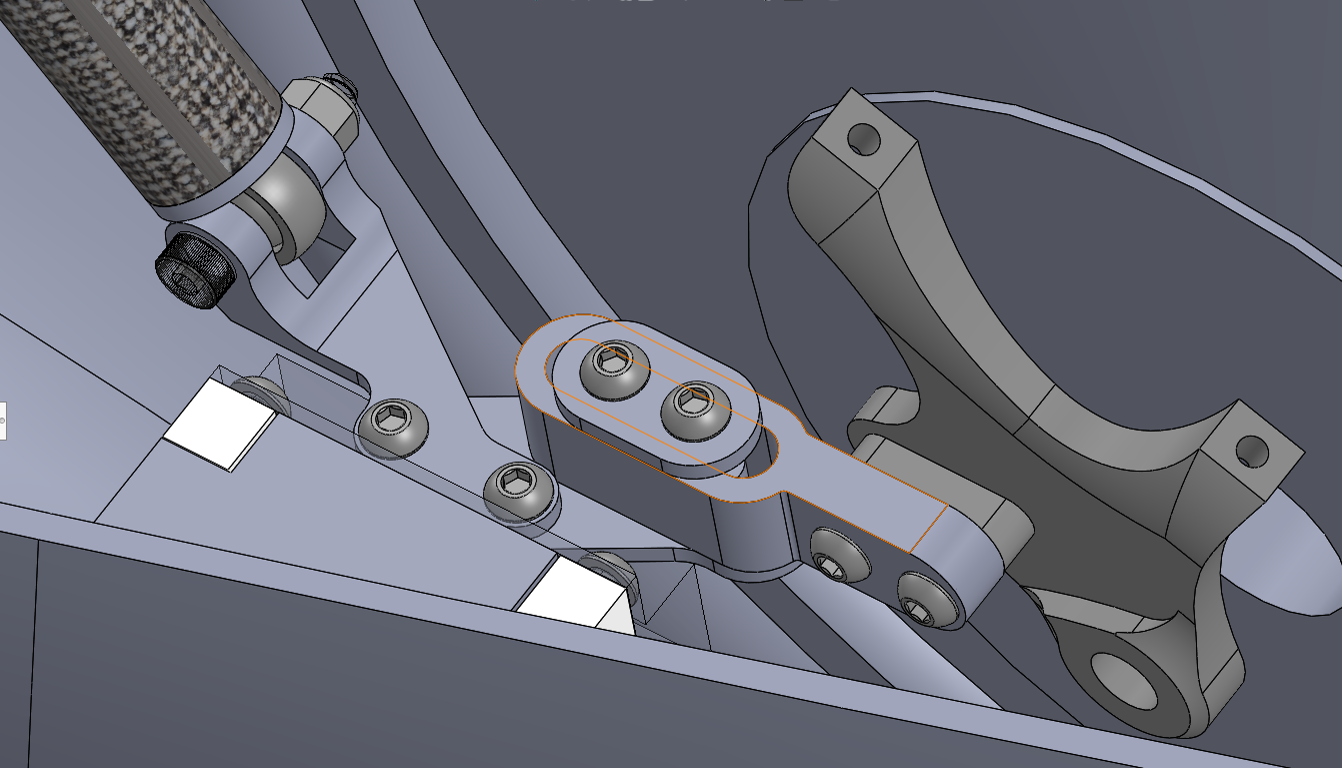
We needed to route the upwards force from the rear wheel to a composite monocoque with enough adjustability to make small changes to the angle of the wheel. The original assembly to do this was heavy and nearly impossible to adjust
what I did
I asked other members what was wrong about the assembly, reproduced their complaints, defined clear requirements, designed a new assembly from scratch, iterated on it with FEA, then manufactured it in the team's own shop.
what happened
A 52% lighter assembly, serviceable with a hex key and manufacturable in the team's own shop, with a safety factor of 2 on the vertical load case in FEA. This design also allows the rear wheel to easily be removed with minimal impact on other car components, saving significant time later in our season.
what I learned
Working with the system myself made me realize that serviceability, not just mass reduction, was key to the design. Spending time in the sketching phase to consider many different ideas allowed me to find a solution which eliminated the serviceability problem rather than make it marginally better.
what I would do next time
Rather than redesign the interface between the monocoque and the wheel, I would run a single steel frame through the monocoque to connect the wheels directly because it is simpler to service and to make, for a small weight penalty. That is the approach I took the following year as Chief Engineer.
The car
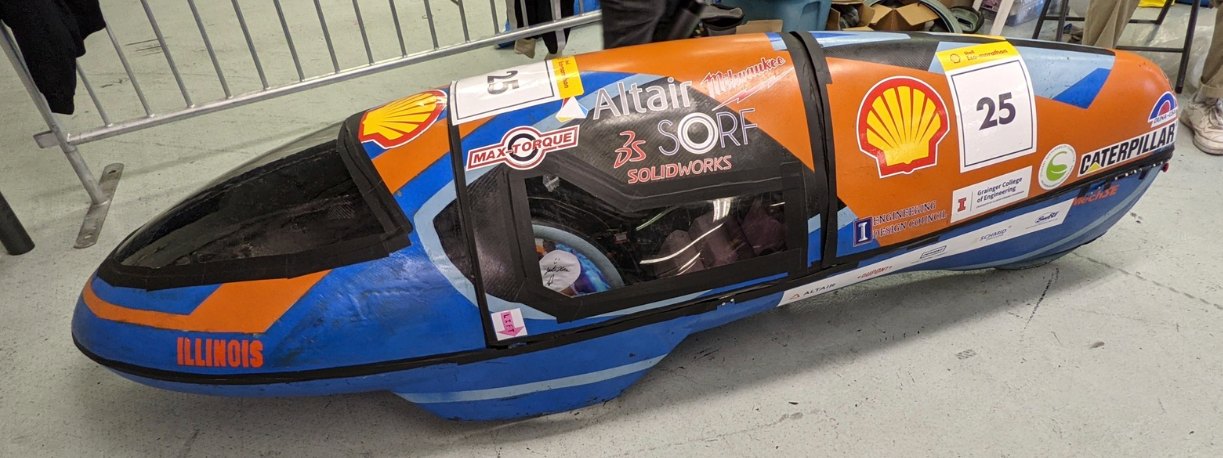
This is the vehicle that the rear wheel adapter went on.
Before
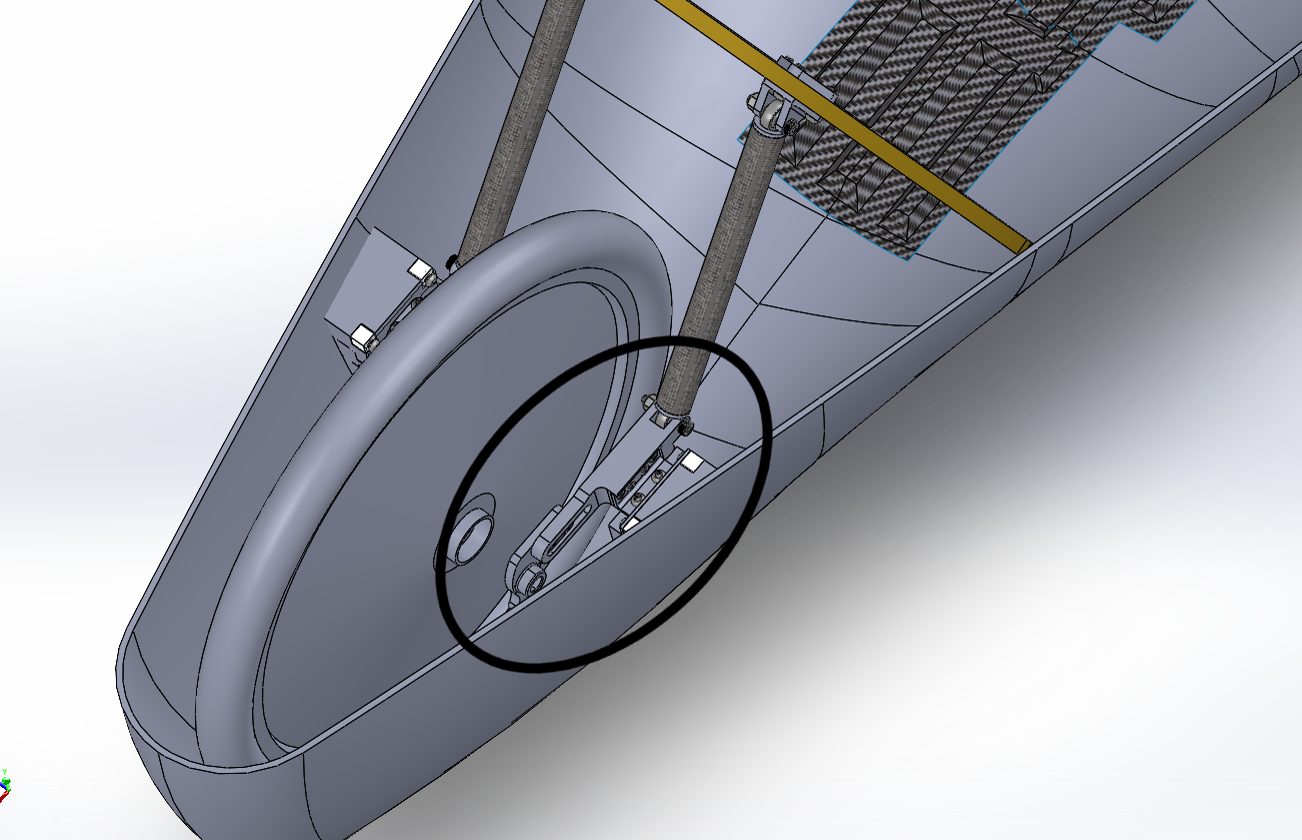
The original assembly carried the weight of the car on an iron bracket and an aluminium part, and its adjustment screws faced into the monocoque. Adjusting the wheel position meant trying to force a hex key into the tiny gap between the adapter and the monocoque.
 no room for a hex key
After
The adjustment screws are rotated a quarter turn to face upward, where a hex key can reach them without the monocoque in the way. The part was manufactured and ran on the car for a season. It was later replaced by adapters to the steel frame I installed the following year.
Analysis
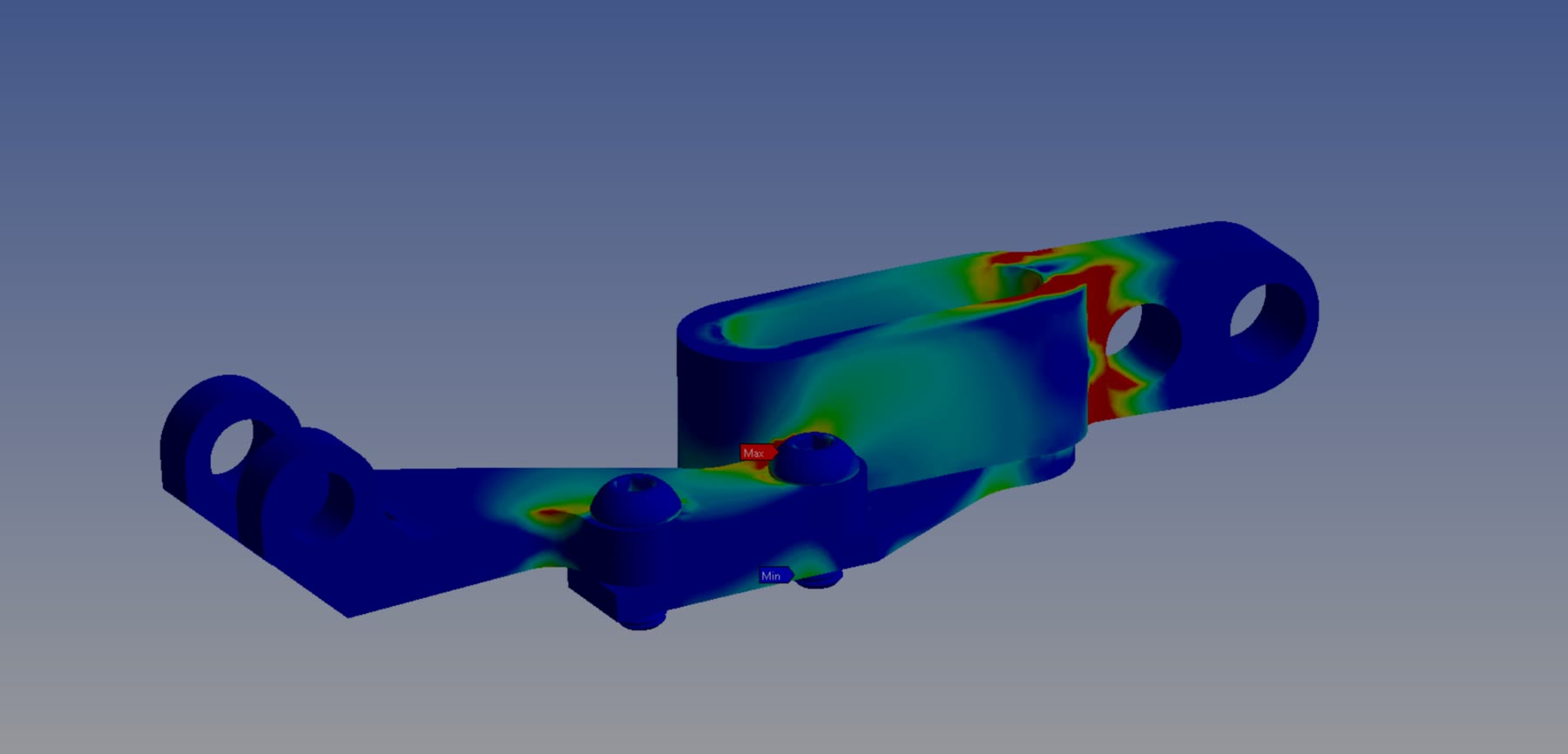
A vertical load on the rear wheel and a diagonal load from the firewall truss was simulated using FEA with contacts and the mounting screws fixed. Cornering and braking cases were also considered but did not change the results. The FEA demonstrates bending stresses on both cantilever sections, as well as stress concentrations from the bolt holes, but retains a factor of safety of 2.